

By
Felix Oboagwina
“Each time I look at the beauty of Abuja, the industry, the flashy cars, the convoys, the majestic buildings, compared with the squalor in the settlements we now live after our displacement in 1976, I cry. My children who are now adults can’t understand what happened” –MICHAEL ABUBAKAR, AN INDIGENE OF ABUJA
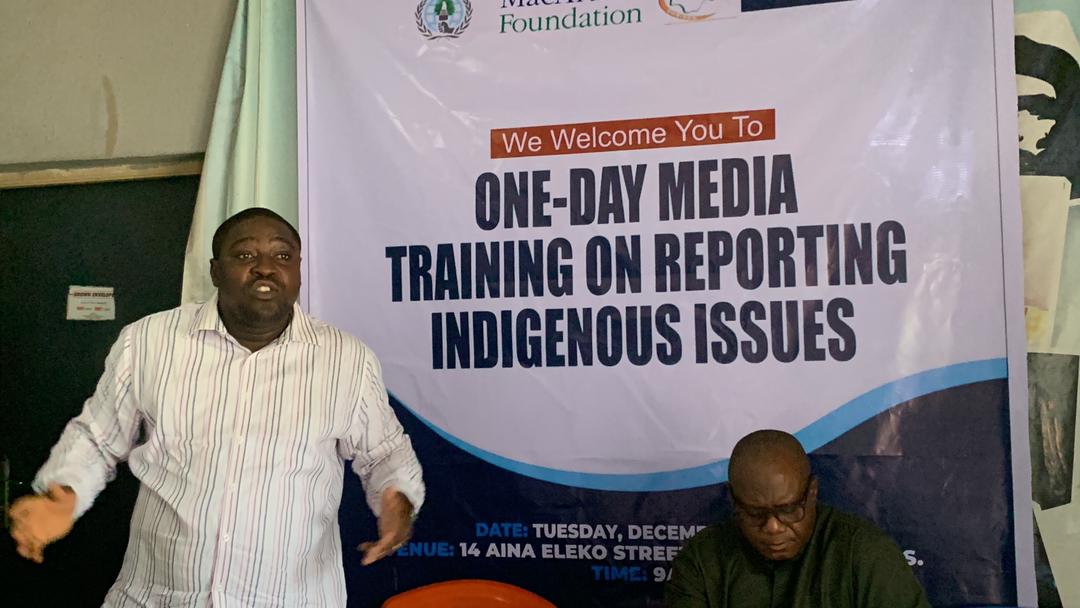
Crucial insights and conclusions came to light when the plight of the native, indigenous and original landlords of Nigeria’s Federal Capital Territory, Abuja, took centre-stage at a one-day seminar for media men in Ikeja, Lagos, on Tuesday, December 8, 2025.
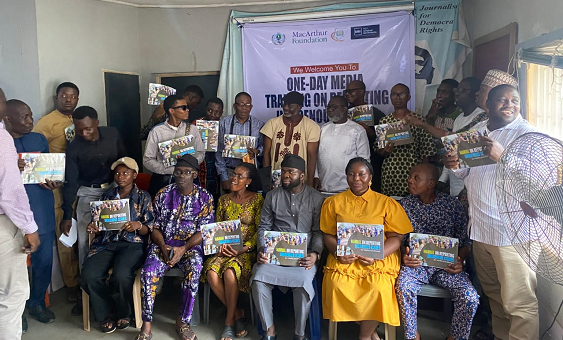
Some 35 media practitioners and journalists from the print, online and electronic media participated in the highly intensive and interactive programme. Its organisers brought the media personalities together so they could hear, sympathise and empathise with the “misfortune” of over 2 million Abuja indigenes displaced from the lands their ancestors had inhabited for over 1,000 years when Nigeria’s powers-that-be “colonised” that space for a new national capital. For these natives, the new capital has been an uninvited curse rather than a blessing laden with contemporary development. Since Abuja in 1976 turned the new capital of the largest Black nation on earth, these nine aboriginal tribes and 12 chiefdoms have been forcibly displaced without organised compensation or relocation. The afflicted tribes include: Gbagyi (Gwari, which happens to constitute the largest group), Ganagana (Abawa), Nupe, Egbira (Egburra), Koro, Gwandara, Bassa and Gade.
“These communities, whose history is entwined with the very soil of Nigeria’s capital, now face systemic exclusion from economic, political and socio-cultural life,” lamented Professor Ahmed Abdulmumini Bala in a recent presentation.
Like the Red Indians of America and the Aborigines of Australia in their home continents, Abuja indigenous populations found themselves suddenly displaced when Nigeria took possession of their land for a new Federal capital instead of Lagos. But like scattered sheep, these wretched of the earth have not been able to find a place of refuge and green pastures. In fact, the forum disclosed that their dispersal has made them an endangered species with their language and culture in veritable danger of extinction.
“The paradigm shift in their history began with Decree 4 of February 4, 1976, and the Federal Capital Territory (FCT) was created by the Military Government of the Late General Murtala Muhammed…. The city officially replaced Lagos on December 12, 1999 as the new capital of the country,” said Adewale Adeoye of the Network of Journalists on Indigenous Issues (NEIJI), digging into the genesis of the issue.
The nation has taken so much from these citizens and given them little in return.
Adeoye, NEIJI Coordinator, said the aim of the training was for journalists to help shape peace-building and conflict-prevention in Nigeria.
But should sympathisers cry more than the bereaved? Why are the indigenes themselves not screaming themselves hoarse about their plight, instead of leaving that responsibility to NGOs like the MacArthur Foundation and Resource Centre for Human Rights and Civic Education who provided funding for the event tagged, “Training for Media Practitioners on Reporting Indigenous Issues.” Journalists there wondered why representatives of the concerned Abuja victims failed to show up at the programme.
To this, Francis Abayomi, a resource person at the parley, responded that the indigenes themselves had raised their voices about their plight severally. At a point, they threatened had to block highways leading into the FCT and went as far as standing in the way of bulldozers sent to level their abodes. But when they found themselves staring down the barrels of the superior firepower of soldiers, police and other security agencies, as well as the bulldozers government amassed for the demolishing of their homes, the natives had no choice but yield ground. Subsequently, 2 million natives were forced to relocate, many as refugees taking shelter in the woods and forests. They could only weep silently as the graves and bones of their ancestors were crushed to dust by the merciless wheels of bulldozers, politicians and administrators, who know nothing and care little about the story of Abuja’s origin.
Conclusions from the interactive session indicated that all that the regimes have extended to Abuja indigenes bothered on tokenism. This comes in the form of representatives at the National Assembly who are not indigenes, ditto appointments to the Federal Executive Council of people who have no root in the indigenous population.
However, Adeoye thinks the clock is ticking. He warns: “Bottled up grievances among the 2 million-strong indigenous people may find outlets in unpleasant manners.”
According to Adeoye, the Abuja Original Inhabitants (AOIs) must be regarded as critical stakeholders in nation building: “We should not wait for a repeat of the Niger-Delta uprising to happen in Abuja before we listen to their demands.”
Over all, participants at the one-day training said they were enriched with broader knowledge and greater understanding of the travails of the Abuja Original Inhabitants (AOIs), whose fears and aspirations, they said, demanded urgent redress.
“As journalists, we need to promote the voices of indigenous peoples in Abuja and elsewhere, appreciate their desire and amplify their demands within the constitutional framework in line with global standards,” Adewale Busari of Silverbird Television said.
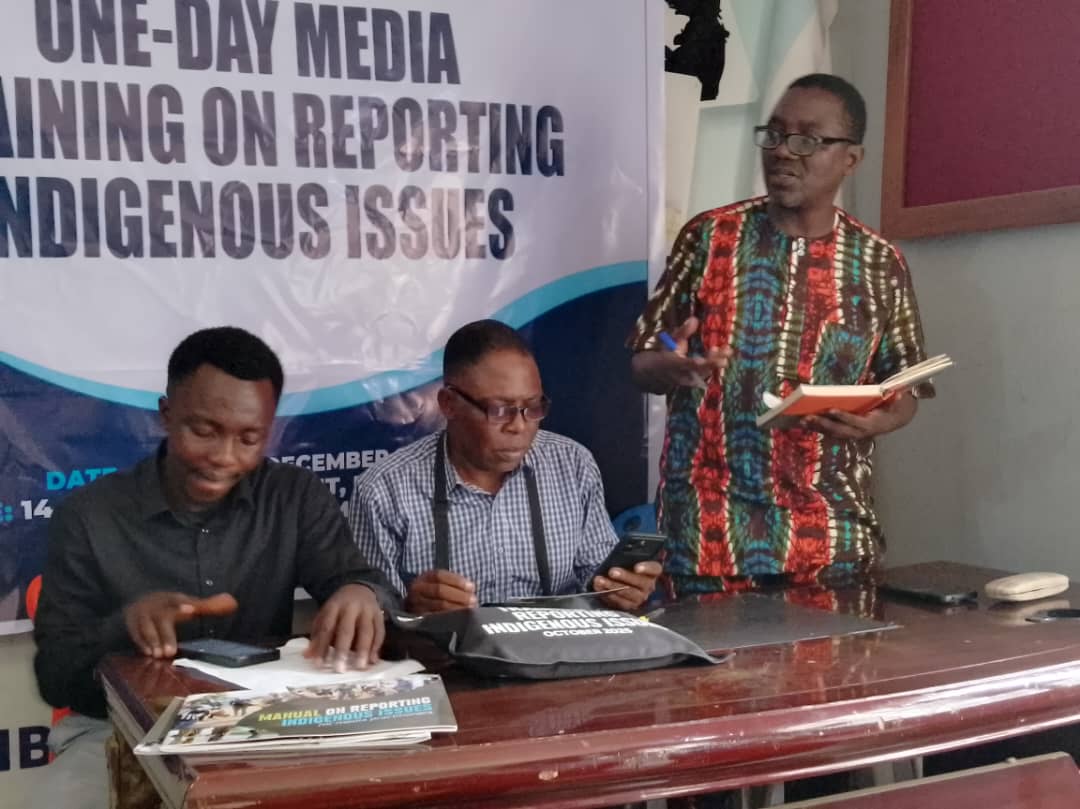
Busari’s words received the backing of more than one colleague.
Francis Banji Abayomi, Editorial Board member of The Guardian, said in his presentation: “The media has a critical role in setting the agenda for peace-building and stability of democracy. Given the challenges faced by countries in West Africa, which is home to millions of indigenous peoples, the media has the responsibility to echo the voices of vulnerable people, their social, cultural and economic needs. It is the only way they can be heard. It is the only way their fears can be turned into hope for sustainable growth and development.”
As listed by the participants, the expectations of the Abuja Original Inhabitants include:
- Recognition of the rights of Abuja indigenous people
- The creation of “Abuja State” to advance the political and economic rights of Abuja Original Inhabitants (AOIs)
- Free, prior and informed consent of Abuja indigenous people regarding the exploitation and exploration of the resources in their ancestral land
- Special considerations to ensure job opportunities for AOIs in the Federal Capital Territory (FCT)
- Domestication of the International Labour Convention, (ILO) 169 and the United Nations, (UN) Declaration on the Rights of Indigenous Peoples (UNDRIP), adopted by the United Nations General Assembly in 2007
- Setting up of a special panel by The Presidency to investigate cases of unpaid compensation, displacement, destruction and seizing of ancestral lands and sacred spiritual temples belonging to the Abuja Original Inhabitants (AOIs).
Observing that the crusade currently bore the signature of non-natives and outsiders, journalists like TheNewsGiant Publisher, Felix Oboagwina, counselled that the struggle must evolve faces and voices like that of Ken Saro-Wiwa, who championed the Niger-Delta’s fight against exploitation and environmental degradation by oil-producing activities. According to Oboagwina, Abuja natives themselves must throw up go-to persons that investigators can readily contact for interviews, investigations and representation.
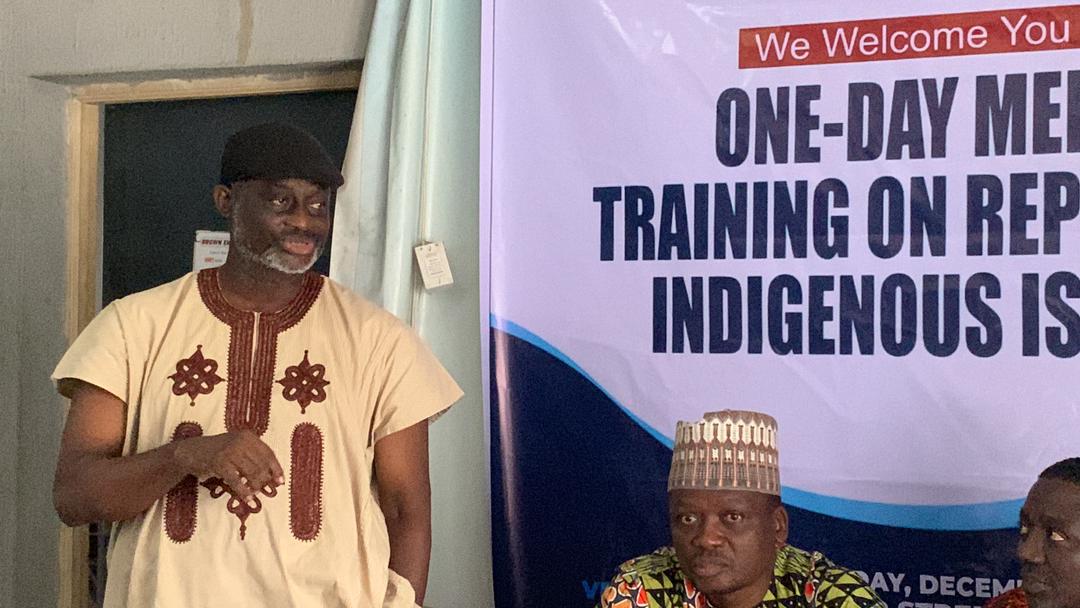
Backing that position, several media persons also recommended that this would be the way the Abuja natives must go, even if in a non-violent fashion. They must find their own face, their own champion, their own Saro-Wiwa.
NGOs and media personalities, who gathered at the Lagos event last Tuesday, came away with a robust commitment to echoing from the rooftops the injustice suffered by the aboriginal Abuja natives, weeping for the ancestral lands taken away from them in the cover of “overriding national interest.” After all, what is national interest without a human face?
OBOAGWINA IS AN AUTHOR AND JOURNALIST AND WRITES FROM LAGOS

