


BARRISTER SOLOMON DALUNG: CONGRATULATIONS PRESIDENT TINUBU FOR INTERVENTION IN BENIN REPUBLIC, NOW TRUMP IS WELCOME
The early hours of Sunday, 7th December 2025, witnessed a sudden military putsch in the Republic of Benin. Soldiers led by Lt. Col. Pascal Tigri seized the national television station, announced the dissolution of democratic institutions, and ordered the closure of airspace and land borders. In what appeared to be a decisive display of regional leadership, President Bola Ahmed Tinubu, as Commander-in-Chief of the Nigerian Armed Forces, swiftly deployed air assets and ground troops across the border.
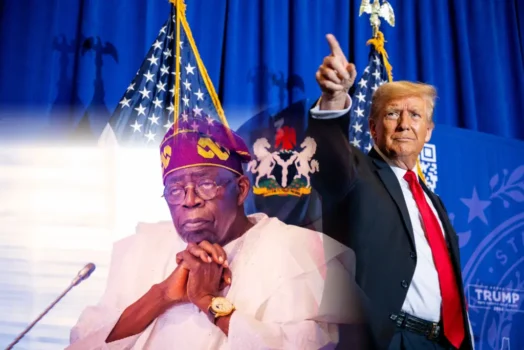
Within one hour, the Nigerian Air Force reportedly executed coordinated aerial strikes on convoys believed to be transporting coup loyalists. The operation was quick, clinical, and effective. The putsch was crushed, stability restored, and constitutional order reinstated. For this prompt action, President Tinubu deserves commendation. His intervention reaffirmed Nigeria’s historic role as a backbone of West African stability and guardian of democratic norms in the sub-region.
However, this success story raises uncomfortable but important questions about the Federal Government’s commitment to combating terrorism, banditry, and internal insecurity within Nigeria. If we possessed such air power, tactical response capacity, and elite strike forces all along, why have we watched terrorists ravage communities, kidnap schoolchildren, and murder citizens daily without equivalent urgency? Why was Brigadier General Musa Uba left abandoned in the forest for days, only for his location to be compromised and he subsequently recaptured and executed by ISWAP?
The nation is forced to ask why the same swift coordination used in Benin Republic is absent in Sambisa Forest, Plateau, Zamfara, Niger, Kaduna and other theatres where terrorists operate freely. Why can fighter jets neutralize coup plotters in another sovereign state, yet fail to locate and dismantle insurgent enclaves within our borders? Are we saying Nigerian forces can cross borders under 24 hours to restore democracy abroad, but cannot rescue over 300 schoolchildren kidnapped in Niger State or thousands languishing in captivity across the North?
These contradictions suggest that Nigeria’s insecurity persists not necessarily due to incapacity, but because of institutional hesitation or deliberate political choices. A government that can mobilize rapidly beyond its borders cannot convincingly argue helplessness at home. The painful impression is that protecting foreign democracy appears more urgent than protecting Nigerian lives, dignity, and territorial integrity.
Under international law, a state that is “unwilling or unable to protect its citizens from mass atrocities” risks inviting external intervention under the doctrine of collective self-defence. President Tinubu’s swift action in Benin, contrasted with slow responses to mass killings and kidnappings at home, unfortunately aligns with the global perception that Nigeria is unwilling to decisively confront terrorism. It therefore validates foreign voices, including President Trump, who argue that outside assistance may soon become necessary to defend Nigerians where their government has failed.
In conclusion, while we applaud the restoration of democracy in Benin Republic, we demand the same energy, courage and urgency to secure Nigerian citizens. Let the fighter jets that flew into Cotonou also roar over Sambisa. Let the boots that marched for Benin march for Chibok, Kachia, Mangu and Kontagora. National strength is not measured only abroad, it is proven at home.
SOLOMON SELCAP DALUNG SERVED AS MINISTER OF YOUTH AND SPORTS FROM NOVEMBER 2015 TO MAY 2019

