


By
Nze David N. Ugwu
A Nation on Edge
When Alhaji Bashir Dalhatu, a respected leader of the Arewa Consultative Forum (ACF), recently suggested that bandits, Boko Haram elements, and other armed groups operating across Northern Nigeria should be granted amnesty—just as the Yar’Adua administration did for Niger Delta militants—many Nigerians were stunned. Some viewed his comment as sympathetic pragmatism; others saw it as an alarming signal that the security crisis in the North may not be as organic as portrayed.
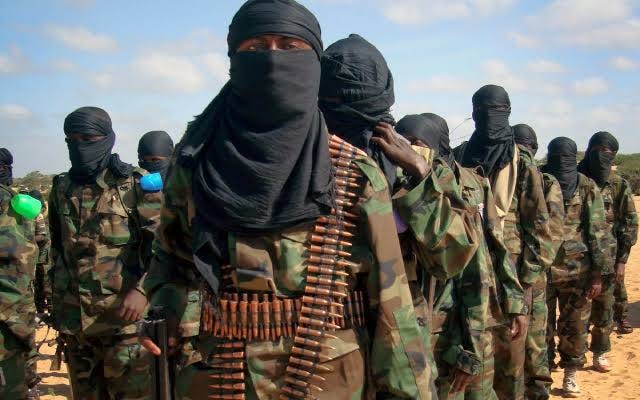
The backlash was swift. Voices across the South, Middle Belt, and even parts of the North questioned the morality, logic, and timing of the proposal. How could terrorists—responsible for the murder of children, mass abductions, rapes, extortion, the destruction of villages, and displacement of over two million people—be considered for amnesty when thousands of victims still await justice?
Within this national outrage emerged another question, whispered by citizens and sometimes articulated openly:
Is the insecurity in Northern Nigeria real, or is it deliberately sustained to extract financial, political, and military benefits from the Federal Government?
To answer this, one must resist emotional conclusions and examine the full tapestry of Nigeria’s insecurity: its history, its evolution, its political economy, and the complex interests that sometimes profit from chaos.
The Anatomy of Northern Insecurity: Beyond Headlines
Nigeria’s insecurity did not begin today. It is the cumulative consequence of decades of complex social, political, and economic failures. In the North, insecurity manifests through several overlapping forms:
- Boko Haram Insurgency (North-East)
What began in 2009 as a radical extremist movement has morphed into a hybrid insurgency with factions, criminal elements, foreign fighters, and ideological sympathizers. Despite being degraded, Boko Haram/ISWAP remains active across Borno, Yobe, and Adamawa.
- Banditry (North-West)
Bandit groups started as small cattle-rustling gangs but evolved—through arms proliferation, porous borders, and economic desperation—into sophisticated criminal networks controlling forests in Zamfara, Katsina, Kaduna, Kebbi, Sokoto, and Niger State.
- Farmer–Herder Conflicts (North-Central)
Climatic pressures, demographic growth, expanded farmlands, and weakened traditional conflict-management systems fuel violent clashes between farmers and nomadic herders.
- Ethno-Communal Violence
In Plateau, Southern Kaduna, Benue, Nasarawa, and Taraba, identity-based grievances have escalated into recurring cycles of revenge killings.
- Kidnapping for Ransom
Nigeria has become one of the world’s kidnapping hotspots, with the North-West and North-Central bearing the highest burden.
- Arms Proliferation and Collapsed Local Security
An estimated cross-continental flow of small arms from Libya, Sudan, and the Sahel has turned local criminals into mini-armies.
Thus, Northern insecurity is not a single problem—it is a convergence of several crises feeding off one another.
Is the Insecurity Contrived? Understanding the Political Economy of Violence
To ask if Northern insecurity is “contrived” is to confront a painful truth: in every conflict, there are beneficiaries. This does not mean the entire crisis was planned from the beginning, but over time, certain actors have learned to profit from sustained insecurity.
The Security Business
Defence budgets, special interventions, emergency appropriations, and military procurement often increase during prolonged crises. When oversight is weak, insecurity becomes lucrative.
Ransom Economy
Kidnapping has become a billion-naira industry. Ransom negotiations—often facilitated by local intermediaries—lead to networks of corrupt actors benefiting directly.
Illegal Mining and Resource Looting
In Zamfara and parts of Kaduna, bandits protect or collaborate with illegal miners. Conflict serves as a cover for exploiting gold and other mineral resources.
Arms Dealers, Informants, and Criminal Collaborators
Weapons suppliers, corrupt local elites, informants, rogue security personnel, and cross-border traders gain financially from prolonged chaos.
Politicians Weaponizing Insecurity
In some cases, local warlords are empowered during elections. Bandit groups have been accused of influencing voter turnout or intimidating communities.
Thus, while insecurity is real and devastating, its longevity is sustained partly because too many actors—from powerful elites to village-level criminals—are profiting from it. This makes any blanket amnesty proposal deeply controversial.
The Amnesty Question: Lessons and Misconceptions
The Niger Delta amnesty program (2009) is often cited as a success story. But the comparison with Northern terrorism is flawed in at least four ways:
- Different Conflict Origins
- Niger Delta militants: Fought over oil pollution, resource control, and environmental justice.
- Northern terrorists and bandits: Driven by ideological extremism, criminal opportunism, economic desperation, ethnic tensions, and transnational influences.
- Different Actors
Niger Delta militancy had identifiable leaders and structures; Northern bandits and insurgents operate as fragmented, leaderless, fluid networks.
- Difference in Targets
Militants targeted the oil industry; terrorists and bandits attack:
- Schools
- Farmers
- Markets
- Churches and mosques
- Villages
- Military convoys
- Women and children
- Moral and Legal Differences
Terrorism involving mass killings and sexual enslavement cannot be equated with sabotage of oil pipelines. Thus, calls for full amnesty risk signaling to criminals nationwide that violence is a pathway to negotiation and reward.
The Real Roots of Northern Insecurity
Behind the violence lie deeper structural issues that have received insufficient attention:
- Poverty and Inequality
The North-West and North-East have the highest poverty rates in Nigeria. Youth unemployment fuels recruitment into bandit and extremist groups.
- Collapse of Education
Millions of out-of-school children—especially Almajirai—become easy prey for radicalization and criminal groups.
- Climate Change
Desertification, shrinking water resources, and drought have increased pressure on land and intensified farmer–herder clashes.
- Governance Failures
Weak leadership at state and local levels, poor intelligence coordination, corruption in security institutions, and absence of accountability worsen insecurity.
- Weak Judicial and Law Enforcement Systems
Few bandits or insurgents ever face trial. Communities often feel abandoned, leading to self-help violence and vigilante retaliation.
- Porous Borders
Northern Nigeria is exposed to weapons and fighters from the Sahel—Niger, Mali, Chad, and Sudan.
- Breakdown of Traditional Authority
Traditional rulers, once powerful conflict mediators, have been eroded by political interference and loss of legitimacy.
These are the real roots of insecurity—far more complex than a manufactured ploy, but also easily manipulated by actors seeking advantage.
How the Insecurity Became Self-reinforcing
As violence spread, it evolved into a self-sustaining ecosystem:
Community Displacement → More Poverty → More Recruitment
Millions of displaced people lose farms, homes, and livelihoods. Their children are easily recruited.
Loss of State Control → Rise of Criminal Governance
Bandits impose taxes, settle land disputes, and operate as parallel governments in some forests
.
Militarization → Civilian Casualties → Distrust
Heavy-handed military operations sometimes harm civilians, driving resentment.
Economic Collapse
Agriculture—the backbone of the North—has been devastated. Food prices have skyrocketed nationwide. Thus, insecurity is no longer just a crisis—it is an economy and a political structure of its own.
Is the Insecurity Real or Contrived? A Balanced Assessment
The Northern insecurity crisis is very real, but certain elements of the response are indeed influenced by politics, economic interests, and power dynamics.
The Insecurity Is Real Because:
- People are dying daily.
- Thousands of schools are closed due to fear.
- Military personnel are frequently ambushed.
- Communities are abandoned.
- International humanitarian assessments corroborate the severity.
But It Is Also Exploited Because:
- Crisis has become a source of wealth for arms dealers, ransom negotiators, and corrupt officials.
- Some local leaders gain political leverage by positioning themselves as intermediaries with bandits.
- State officials sometimes negotiate secretly with criminals.
- Resources allocated for security often lack transparency.
- Illegal mining is thriving under cover of violence.
Thus, the appropriate conclusion is this: Northern insecurity was not intentionally created, but over time, vested interests have emerged that benefit from its continuation. This makes resolution harder.
The Way Forward: A Realistic Multi-Level Strategy
Nigeria cannot defeat insecurity through military force alone—or through misguided amnesty proposals. A comprehensive approach is needed:
State-Level Accountability
Governors must demonstrate measurable progress on security reforms, intelligence coordination, and local policing’
National Security Sector Reform
- Restructure defence procurement
- Strengthen intelligence fusion
- Rotate commanders based on performance
- Build trust between security forces and civilians
- End corruption in promotions and logistics
Regulate and Monitor Mining
Illegal mining fuels banditry. Security must accompany mining reforms.
Education Revival
Invest in:
- Out-of-school children programs
- Almajiri system reform
- School safety and rebuilding
Economic Inclusion
Agriculture, livestock value chains, and rural industries must be revived to offer alternatives to banditry.
Community Peacebuilding
Support traditional rulers, religious leaders, dialogue forums, and local vigilantes—under strict legal supervision.
International Collaboration
Counterterrorism must align with ECOWAS, AU, and Sahelian states to contain cross-border insurgency.
Reject Blanket Amnesty
Selective reintegration of repentant fighters may be considered, but not a political amnesty that whitewashes atrocities.
Beyond Conspiracies, Toward Solutions
Insecurity in Northern Nigeria is not a ploy—but neither is it free from manipulation. It is a real humanitarian, political, and economic disaster that has been allowed to deepen partly because too many actors benefit from the chaos’
What Nigeria needs now is truth, accountability, and a security strategy that targets both the violence and the vested interests behind it. Only then can the nation escape the cycle of bloodshed and rebuild trust across regions.
If Nigeria confronts the real causes—poverty, climate pressure, weak governance, porous borders, poor education, and corruption—then no call for amnesty will be necessary. For peace will return through justice, reform, and national resolve, not political expediency.
Nze David N. Ugwu is the Managing Consultant of Knowledge Research Consult. He could be reached at [email protected] or +2348037269333.

