

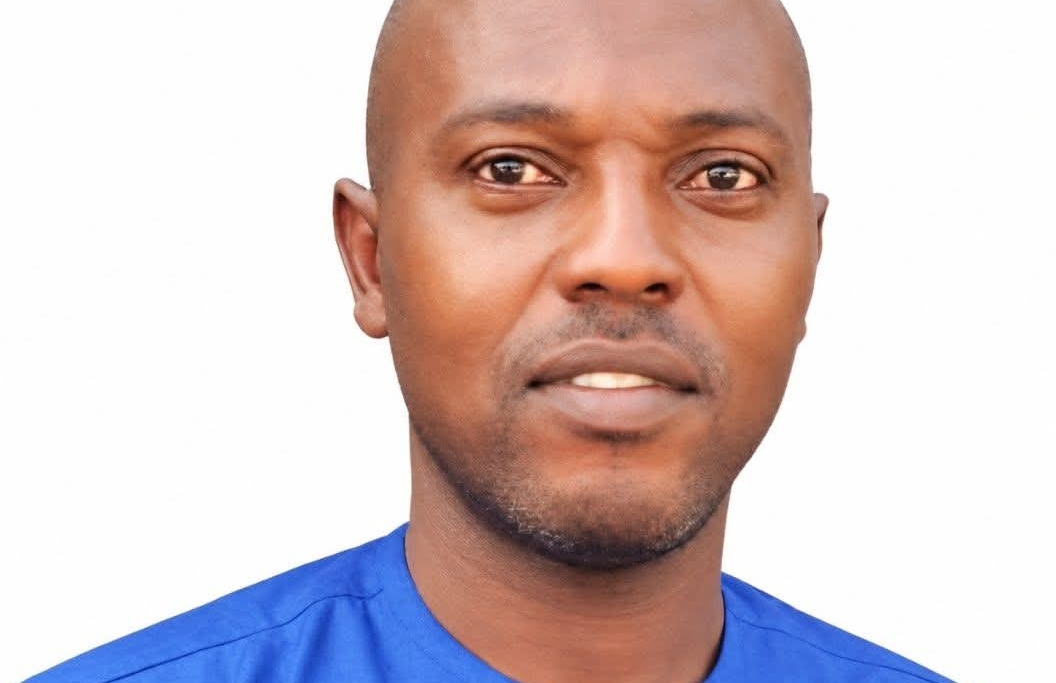

LASUTH Hospital’s Failings Killed My Brother
So long, Olatunde Joseph Ojelabi (1980–2026)
The 6th of September 2026 was just another Sunday, although it was the first Sunday of the month. As was customary in their church, it was a day when those celebrating their birthdays in the month would come before the Lord to give thanks for the gift of another year.
For my younger brother, Olatunde Joseph Ojelabi, it was particularly significant. His birthday was the following day, 7 September 2026, when he would have turned 46.
That Sunday morning, he was driving his family to church to participate in the service and give thanks to God.
But that journey to church would tragically become the beginning of the end of his life.
As he drove along Ijegun Road, Ikotun, a commercial tricycle, popularly known as a Keke Marwa, suddenly made an abrupt turn, apparently in an attempt to pick up passengers. In an effort to avoid colliding with the tricycle, Olatunde swerved, and his vehicle crashed into a stationary vehicle.
The impact was severe enough to trigger the deployment of the airbags. Unfortunately, the force of the collision caused the steering wheel to strike his face with tremendous force, resulting in severe injuries, particularly to the right side of his face.
He was promptly taken to a nearby private hospital. However, because of the severity of his injuries, the hospital was unable to provide the level of care required and referred him to the Lagos State University Teaching Hospital (LASUTH).
According to the account, Olatunde arrived at the LASUTH Medical Emergency Unit before 9:00 a.m.
What happened thereafter is something our family will struggle to understand for the rest of our lives.
Rather than receiving what we believed should have been immediate emergency attention, my brother was reportedly left outside the emergency ward because, according to the medical team on duty, “there was no bed.”
For more than six hours, my brother—who had sustained serious injuries in a road traffic accident—was reportedly left without the urgent intervention we expected from a major tertiary healthcare institution.
Then his condition deteriorated.
He began to convulse and eventually suffered a cardiac arrest.
It was only at that point that the medical team intervened to resuscitate him.
I cannot adequately describe what it felt like to witness the horrific scene.
A man who had left his home that morning to take his family to church was now fighting for his life in a hospital that was supposed to be equipped to respond to medical emergencies and save lives.
An emergency procedure was subsequently carried out, for which I gave my consent. A surgical opening was made in the front of his neck into the windpipe to enable a breathing tube to be inserted. The procedure, I was told, was a tracheostomy, which is performed to create an airway for a patient who is unable to breathe adequately through the normal airway.
Following the cardiac arrest, Olatunde had to be transferred to the Intensive Care Unit.
But before leaving the Medical Emergency Unit, another incident left me deeply shocked.
We were instructed to buy a plastic bucket, towel and detergent so that the floor where Olatunde’s blood had reportedly spilled heavily could be cleaned.
I found it difficult to comprehend that, in the midst of a life-threatening medical emergency, the family of the injured patient was being asked to concern itself with cleaning the floor.
Even then, our ordeal did not end.
One of the most distressing experiences for me was being told by members of the medical team that I needed to go to the ICU myself to find out whether there was a bed space available for my brother.
At that point, I was aghast.
How does a system designed to save lives become so impersonal, so bureaucratic and, at its worst, seemingly so indifferent to a human life hanging in the balance?
At the ICU, we were informed that we would need to pay for the services of carers for an initial period of ten days.
Before 6 September 2026, I had always held LASUTH in high regard. I regarded it as a major reference teaching hospital and an institution where Nigerians could receive quality medical care, particularly in life-threatening situations.
But as the days unfolded, I began hearing disturbing accounts from people who had experienced what they described as the harsh realities of seeking emergency care at LASUTH.
Those accounts were painful to hear.
But what was even more painful was watching my own brother’s experience unfold before my eyes.
For the first three days in the ICU, we were asked to undertake several tests. I understood that many of these investigations could be necessary for a patient who was unconscious following a serious accident and cardiac arrest. We needed to establish the extent of his injuries and determine the major medical challenges he was facing.
What we did not have was adequate communication.
We were asked to purchase medications running into millions of naira, but without sufficient explanation about the purpose of some of the medications, their expected benefits or the treatment strategy being pursued.
There was virtually no one taking adequate time to explain my brother’s condition properly to his family.
We were left with questions, anxiety and uncertainty at a time when every minute mattered.
I eventually had to seek the assistance of one of the senior doctors at LASUTH to come to the ICU and brief my brother’s wife and me about his condition.
To his credit, the doctor did exactly that.
He explained the interventions that had been carried out and the investigations that had been conducted. He answered our questions and, at the end of the briefing, described Olatunde’s condition in one phrase:
“He is still critically ill.”
Those words were not lost on me.
*Critically ill.*
I understood exactly what those words meant.
My brother was fighting for his life.
But I also could not stop asking myself a painful question:
Could things have been different if he had received immediate and appropriate emergency attention when he arrived at LASUTH before 9:00 a.m.?
That is the question that will continue to haunt me.
Olatunde was not merely a patient.
He was a son, a husband, a father, a brother, a relative, a friend and a member of his community.
He was a human being who arrived at a public teaching hospital alive and in desperate need of urgent medical intervention.
He deserved to be treated with urgency, dignity, compassion and the full benefit of an emergency healthcare system designed to preserve life.
Instead, our family was left with the devastating impression that the system failed him when he needed it most.
Olatunde Joseph Ojelabi died on 12 September 2026. He should not have died.
He had turned 46 just five days earlier, on 7 September, while lying unconscious and fighting for his life.
Our family will forever remember that birthday—not as a celebration of life, but as a painful reminder of a life that was slipping away.
I continue to struggle to reconcile what happened to my brother with the fundamental principles of medical practice.
The Hippocratic Oath embodies the commitment of medical professionals to place the welfare of patients at the centre of their practice. Emergency medicine, in particular, demands urgency because delays can mean the difference between life and death.
The question is: “Why was a critically injured road traffic accident victim reportedly left waiting for hours because there was no bed?
What emergency protocols were activated when he arrived?
Was his condition properly assessed and triaged?
What interventions were considered or carried out during those crucial hours?
Could earlier intervention have prevented the deterioration that followed?
Were appropriate trauma and neurological assessments conducted promptly?
Why was the family not adequately informed about his condition and treatment plan?
And, most importantly, did any delay in receiving emergency care contribute to the severity of the outcome?
These are questions that deserve objective answers—not only for Olatunde’s family, but for every Nigerian who may one day arrive at a hospital emergency unit after an accident.
This Is About Accountability. This is not merely about our grief.
It is about accountability.
It is about the value placed on human life.
It is about what happens to an injured Nigerian who arrives at a major public hospital requiring emergency care.
And it is about whether our healthcare system, particularly its emergency response system, is truly prepared to save the lives it is established to protect.
I write this not out of hatred for LASUTH or its personnel. I write because I loved my brother. I write because his life mattered. I write because his family deserved better.
And I write because if there were failures in the care he received, those failures must be confronted honestly, transparently and without fear.
Olatunde’s death must not become just another statistic.
His story should compel the Lagos State Government, the management of LASUTH, healthcare regulators and all relevant authorities to examine what happened, establish the facts and determine whether any system failures occurred.
If mistakes were made, they must be acknowledged.
If procedures were not followed, those responsible must be held accountable.
And if the system itself is inadequate, it must be fixed.
Because somewhere in Lagos today, another family may be driving towards an emergency department with a loved one whose life depends on what happens in the next few minutes.
No family should have to wonder whether their loved one was lost because the system was not ready to save him.
Olatunde Joseph Ojelabi was alive when he arrived at LASUTH.
He left the hospital six days later in death.
His family deserves answers.
Lagos deserves answers.
And Nigerians deserve a healthcare system in which an emergency patient is treated first as a human life to be saved—not as a number waiting for a bed.
May his soul rest in perfect peace.
Olatunde Joseph Ojelabi
7 September 1980 – 12 September 2026