

Beyond The Bin: Building A Waste Management System That Works Uniquely For Lagos
By
Olumide Thompson
For millions of Lagos residents, the measure of an effective waste management system is relatively simple: waste is collected when promised, streets and drains remain clean, and what is collected is managed responsibly. Behind these expectations, however, lies one of the most complex urban service delivery challenges facing Africa’s rapidly growing cities.
Lagos generates thousands of tonnes of waste daily. Managing this volume requires more than collection trucks and disposal sites. It demands a coordinated system of infrastructure, financing, technology, private sector participation, institutional oversight and public responsibility.

The scale of the challenge is considerable, but so too is the opportunity. Waste management should no longer be viewed solely as a sanitation obligation. Properly structured, it can become an important driver of economic activity, enterprise development, employment and environmental sustainability.
The Lagos Waste Management Authority (LAWMA) has played a central role in managing the state’s waste since its establishment in 1977. Over the years, the institution has evolved alongside the city’s growing population and increasingly complex environmental needs. Initiatives aimed at improving collection, strengthening private sector participation, modernising infrastructure and expanding resource recovery provide an important foundation for continued progress.
The opportunity now is to build on these efforts through an increasingly integrated, financially sustainable and accountable system that delivers measurable improvements across Lagos.
From the perspective of resource recovery and enterprise development, five priorities deserve particular attention.
- Plan around the waste Lagos actually produces
Effective waste management begins with understanding the composition, volume and geographical distribution of waste.
Household refuse, market waste, industrial by-products, construction debris and healthcare waste cannot all be managed through identical collection and treatment systems. Each presents distinct logistical, environmental and commercial considerations.
A World Bank study of waste management in Lagos highlighted the importance of better waste characterisation, including findings from the Olusosun dumpsite that demonstrated the significant presence of plastics.
However, waste arriving at a disposal site does not necessarily represent the full composition of waste generated across the state. Materials recovered informally or disposed of outside formal collection systems may never reach these facilities.
Lagos would benefit from regularly updated waste characterisation studies covering different communities, commercial centres and industrial areas. This evidence should inform decisions about collection infrastructure, recycling facilities, organic waste treatment, energy recovery and controlled disposal.
The objective should be to match each waste stream with the most technically appropriate and economically viable solution.
An important lesson from resource recovery is that waste becomes a commercially valuable input only when its quality, quantity, collection arrangements and end market are sufficiently understood. Without this foundation, even promising investments risk becoming expensive infrastructure with limited practical value.
- Strengthen local accountability while maintaining central coordination
Waste management is experienced locally. When collection fails, the consequences are visible in individual streets, markets and neighbourhoods.
An effective system must therefore combine strong central oversight with clear accountability at the level where services are delivered.
LAWMA could build on its existing operational arrangements by establishing clearly defined service areas with identifiable managers, measurable performance standards and accessible complaint-resolution mechanisms.
The appropriate geographical boundaries should be determined by population density, road networks, waste volumes, operator capacity and proximity to treatment facilities rather than administrative convenience alone.
Residents should know when collection is scheduled, who is responsible for delivering the service and how problems can be escalated.
At the same time, LAWMA should retain responsibility for setting standards, monitoring performance, coordinating infrastructure and ensuring consistency across the state.
Private Sector Participation operators remain important partners in this model. Their effectiveness depends on clearly defined contractual obligations, appropriate incentives, transparent performance monitoring and sustainable commercial arrangements.
The objective is not decentralisation for its own sake. It is to bring responsibility closer to service delivery while strengthening the institutional capacity needed to manage the system as a whole.
- Turn waste recovery into economic opportunity
One of the most promising opportunities for Lagos lies in developing commercially sustainable markets for materials that would otherwise be discarded.
Plastics, organic waste, metals, paper and other recoverable materials can support businesses, employment and new value chains when reliable collection and processing systems are in place.
Organic waste is particularly relevant given the concentration of food markets, hospitality businesses and manufacturing activities across Lagos.
Through my work in organic waste recovery, I have seen the potential for materials traditionally treated as a disposal burden to become productive resources when the right commercial and operational arrangements exist.
The challenge is not simply identifying technologies capable of processing waste. It is building viable businesses around them.
A recycling or treatment facility requires predictable access to suitable feedstock, dependable logistics, skilled personnel, consistent operating finance and customers willing to purchase its outputs.
This is where public policy and private enterprise must reinforce one another.
Government can create an enabling environment through appropriate regulation, infrastructure planning, procurement and incentives. Private businesses can contribute innovation, investment, operational expertise and market access.
Waste-to-energy technologies may also have a role within this wider system. However, investment decisions must be guided by credible assessments of waste composition, energy content, environmental safeguards, operating costs and commercial viability.
No single technology can substitute for an integrated waste management strategy.
Lagos should also recognise the contribution of informal waste collectors, sorters and aggregators, whose activities already support material recovery and livelihoods. Better integration into formal value chains can improve working conditions, increase recovery rates and strengthen local enterprise.
The long-term ambition should be to develop a circular economy in which waste management supports environmental protection and economic productivity simultaneously.
- Finance the entire waste management value chain
A sustainable waste management system cannot be built through capital investment alone.
Collection vehicles require fuel, maintenance and replacement. Transfer stations require dependable onward transportation. Recycling facilities require operating finance and reliable markets. Disposal facilities require environmental controls, monitoring and long-term management.
These recurrent obligations are just as important as the initial investment in infrastructure.
Lagos therefore needs an integrated financing approach that considers the full cost of collection, transportation, treatment, recovery and final disposal.
Potential funding sources include public budgets, appropriately structured service charges, producer responsibility arrangements, private investment, revenue from recovered materials and development finance.

Each source serves a different purpose and carries different risks. They must be combined within a credible financial framework rather than treated as interchangeable solutions.
Affordability must also remain central. Service charges should be transparent and linked to reliable delivery, while targeted public support may be necessary to ensure that lower-income communities receive adequate sanitation services.
For private investors, the critical requirements are predictable regulation, credible contracts, reliable operational data and confidence in revenue arrangements.
Experience in enterprise development reinforces an important principle: good ideas and promising technologies rarely achieve scale without the institutional and financial conditions needed to sustain them.
The same applies to waste management. Investment should be judged not only by the facilities constructed but by their ability to operate effectively, consistently and affordably over time.
- Make performance visible and citizens part of the solution
Ultimately, the success of Lagos’s waste management system should be measured by outcomes that residents can see and institutions can verify.
A small set of regularly published performance indicators could help demonstrate progress, identify service gaps and strengthen public confidence.
These should include collection reliability, the proportion of generated waste collected, the quantity safely treated or disposed of, material recovery rates, operational costs, recurring illegal dumping hotspots and the resolution of public complaints.
Reporting should distinguish between planned infrastructure, completed construction and facilities that are fully operational.
Clear performance information would also support better decision-making, allowing resources to be directed towards areas of greatest need.
Yet institutional accountability is only one side of the equation.
Residents, businesses, markets and community organisations must also take responsibility for how waste is handled.
Source separation, for example, cannot succeed if residents are encouraged to sort waste only to see it mixed together during collection. Public participation must be supported by practical services, accessible infrastructure and clear incentives.
Similarly, enforcement against illegal dumping must be accompanied by convenient and reliable disposal options.
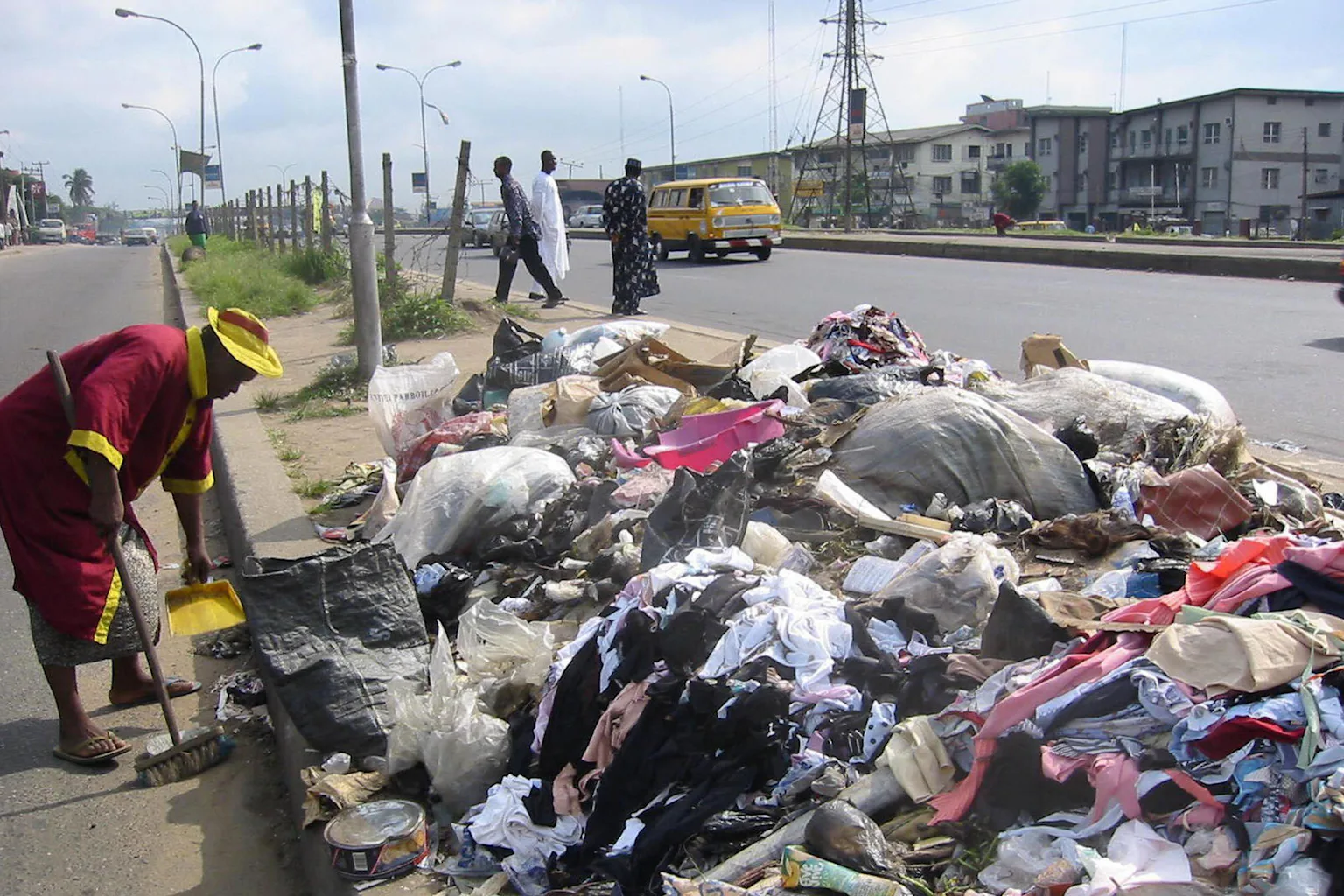
Public education should be sustained through schools, community organisations, market associations and traditional and digital media. The objective should be to make responsible waste handling a normal part of urban life rather than an occasional response to enforcement campaigns.
When citizens understand their responsibilities and public institutions consistently meet theirs, a culture of shared accountability becomes possible.
- The next chapter for Lagos
Lagos has demonstrated its capacity to undertake ambitious infrastructure and urban development programmes. Waste management deserves the same long-term commitment, coordinated planning and institutional discipline.
The next phase should build on existing reforms while strengthening the connections between public institutions, private operators, investors, communities and businesses working across the waste value chain.
This will require more than technology or infrastructure. It will require consistent policy direction, sound financial management, technical competence, operational excellence and the ability to translate strategy into measurable results.
The opportunity is to move progressively from a system centred on waste evacuation towards one that prioritises reliable collection, resource recovery, economic value creation and environmentally responsible disposal.
For Lagos, the benefits would extend beyond cleaner streets. A well-functioning waste management system can support healthier communities, create employment, stimulate enterprise, attract investment and strengthen the city’s resilience.
The ultimate measure of success is straightforward: waste should be collected when promised, recovered where viable, managed safely and prevented from becoming tomorrow’s environmental problem.
That is the standard Lagos should continue working towards, and the foundation of a waste management system fit for the future.
OLUMIDE THOMPSON IS A NIGERIAN ENTREPRENEUR SPECIALISING IN WASTE RECOVERY AND RESOURCE UTILISATION. HE LEADS ECO RENEWABLES & SANITATION COMPANY, WHICH RECOVERS ORGANIC WASTE FROM LARGE MANUFACTURING BUSINESSES FOR CONVERSION INTO PRODUCTIVE RESOURCES./[email protected]>>>>>>>>

