

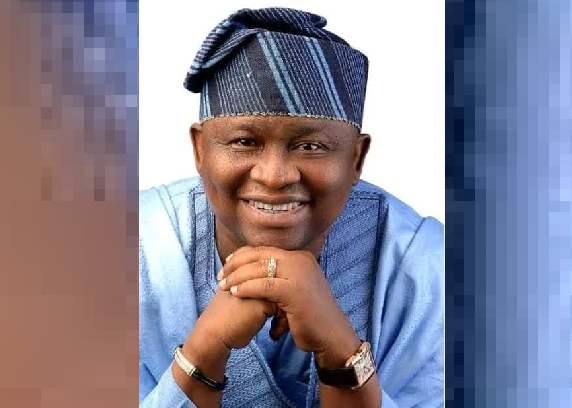

Yayi: A Career In Theft, Opportunism And Dishonesty?
By
Rauf Onigbinde
“Those who live in glass houses should not throw stones.” It is a familiar saying, and a warning that anyone who invites public scrutiny must also be prepared to face questions about their own record.
It is a principle that should apply to every politician, particularly one seeking the highest political office in a state.
Senator Olamilekan Adeola, popularly known as Yayi, has become a prominent and increasingly controversial figure in Nigerian politics. His political journey, questions raised about declarations concerning his state of origin, and allegations relating to the management of public resources have all attracted public attention. These matters deserve clear and convincing answers.
My concern is that political ambition must never become more important than integrity. Public service should be a responsibility to the people, not a vehicle for personal advancement. The people of Ogun State should not be expected to place their future in the hands of political slogans, expensive publicity campaigns or carefully constructed public images. They deserve transparency, consistency and leadership that can withstand scrutiny.
From Lagos to Ogun: political representation or opportunism?
Yayi’s political career was built in Lagos. He served in the Lagos State House of Assembly, represented Lagos West in the House of Representatives and subsequently represented Lagos West in the Senate from 2015 to 2023. In 2023, he moved to represent Ogun West.
There is nothing inherently wrong with a Nigerian politician relocating or seeking to represent a different constituency.
However, the circumstances surrounding this transition have prompted questions that deserve to be addressed.
Former ambassador Folake Marcus-Bello and other political figures have alleged that Yayi made inconsistent declarations concerning his state of origin, referring to Ekiti, Lagos and Ogun in differentb documents or circumstances. These claims have led to calls for his historical electoral declarations to be examined and made public.
Abayomi Hunye, a former governorship aspirant and member of Yayi’s APC, has also reportedly instituted legal proceedings seeking judicial scrutiny of the senator’s previous electoral documents.
Yayi should welcome documentary scrutiny and provide the information needed to put the matter beyond doubt. Ogun State deserves a clear explanation and respect from anyone seeking to govern it.
Suleiman Ogunleye, Solomon Adeola and the Guardian questions
Another issue raised in public commentary concerns the names Suleiman Ogunleye and Solomon Olamilekan Adeola, and the circumstances surrounding Yayi’s departure from The Guardian newspaper.
Ambassador Folake Marcus-Bello, a former Nigerian Ambassador to Zambia and Malawi who says she worked alongside Yayi at The Guardian, has made claims about his employment history and the circumstances of his departure. She has also challenged him to take legal action if he believes her statements are defamatory, arguing that employment records and INEC filings could help establish the facts.
A change of name is not evidence of wrongdoing, nor does an allegation about a former employer establish misconduct. However, where questions have been raised about the timing and circumstances of a name change, the relevant records should be made available so that the public can understand the facts.
Plus, despite the name change, Yayi continued using the old name in government documents such as CAC registrations of companies that get huge government contracts.
So, despite changing his name to Solomon Adeola, Yayi continued getting government contracts as Suleiman Ogunleye. Such is the character of a man who wants to be governor of Ogun State.
Yayi must respond to these allegations because the public deserves a full explanation.
Public interest is best served when public servants respond to accusations and the public judge the veracity of those claims.
The troubling questions surrounding public money
Beyond questions about names and state of origin, perhaps more serious are the allegations concerning the management of federal budget allocations during Yayi’s tenure as Chairman of the Senate Committee on Appropriations.
Reports have documented calls by organisations and political critics for the Economic and
Financial Crimes Commission (EFCC) and the Independent Corrupt Practices and Other Related Offences Commission (ICPC) to investigate alleged irregularities involving constituency projects, budget insertions and federal allocations.
One petition has reportedly alleged that projects worth more than ₦1.8 trillion were linked to Yayi between 2023 and 2026. The petitioners raised questions about potentially duplicated projects, vague budget descriptions, procurement procedures, contractors and whether allocated projects were delivered.
These are serious allegations, but it is important to distinguish an allegation or petition from a proven finding of wrongdoing. The figure cited in a petition should not, without supporting evidence, be treated as money personally received or controlled by the senator. The claims require proper investigation and a response grounded in verifiable records.
Nevertheless, the questions should not be ignored. A candidate seeking to govern Ogun State must be willing to explain matters of public interest, particularly those relating to the use of taxpayers’ money. Yayi should address the specific concerns raised and explain what happened to the projects in question.
Public money is not a politician’s personal property. It belongs to Nigerian taxpayers and must be properly accounted for. Where billions of naira are allocated to projects, citizens should be able to identify those projects, establish their locations, examine their costs and verify whether they have been completed.
The EFCC and ICPC should be allowed to investigate any credible evidence without political interference. If wrongdoing is established, those responsible should face the consequences under the law.
The question of accountability
There are broader questions about the public image Yayi has cultivated, including the considerable resources and influence associated with his political profile. Wealth, political success and philanthropy are not wrong in themselves. However, public figures should be prepared to answer legitimate questions about their conduct, interests and the use of public influence.
A politician should not be judged by the size of their donations, the number of supporters gathered at political rallies or the number of billboards displaying their face. The more important questions are:
What public resources were allocated under his influence?
Were those resources properly utilised?
Can the projects be independently verified?
Were procurement procedures followed?
Have questions about his historical declarations been satisfactorily resolved?
Can his political record withstand independent scrutiny?
These are not unreasonable questions. They are the minimum standards expected of anyone of anyone
aspiring to govern a state. It is time for Yayi to address them directly, rather than allowing political grandstanding to take the place of meaningful answers.
Ogun State is not a political stepping stone
Ogun State is home to millions of people with legitimate expectations of better schools, functioning hospitals, employment opportunities, improved infrastructure and sustainable economic development.
It is also a state with a proud cultural and intellectual heritage, associated with figures such as Fela Kuti, Wole Soyinka, Olusegun Obasanjo and Kessington Adebutu. Its history and contribution to Nigeria deserve to be respected.
The governorship of Ogun State should not be treated as a prize for political influence or as a reward for controlling party structures. Nor should the state be viewed merely as the next step in an individual’s political career.
The people of Ogun State are politically aware and deserve a leader whose commitment to the state is demonstrated through a credible record of service, integrity and accountability.
Yayi must demonstrate that commitment and address the questions raised about his record, including the petitions and calls for scrutiny relating to his role as Chairman of the Senate Committee on Appropriations.
Political ambition is not a substitute for public trust
Moving from one constituency to another may be legally permissible, but earning the confidence of a new electorate requires more than political machinery. It requires transparency, credibility and a convincing explanation of one’s record.
Senator Yayi has every right to defend himself against allegations and challenge statements he believes to be defamatory. Equally, Nigerians have every right to demand answers from their elected representatives. Both principles are essential to a healthy democracy.
The senator should make the relevant historical declarations available, address the allegations concerning budget allocations and welcome independent scrutiny of projects associated with his legislative influence. The relevant institutions should establish the facts and make their findings known in accordance with the law.
The verdict must come from evidence, not propaganda
Ultimately, the question facing Ogun State is not who has the biggest political machinery, the deepest pockets or the loudest supporters. It is who can be trusted with public resources and the future of millions of people.
It is to go beyond the eight years of stagnation in Ogun State.
The allegations surrounding Senator Yayi should be tested through evidence and due process, not simply repeated as established facts. But neither should serious questions be dismissed without proper examination. Until they are convincingly answered, the people of Ogun State are entitled to keep asking them.
Ogun State deserves leadership, not opportunism; accountability, not excuses; and integrity, not political theatrics.
Public office is a public trust. Nobody should be allowed to turn it into a personal enterprise.
Rauf Onigbinde is a Political and Social Analyst.