The President’s Vacation And The Citizen’s Right To Know
By
Nze David N. Ugwu
There is something fundamentally uncomfortable about the way African leaders, including Nigerian presidents, approach vacations abroad. The discomfort is not about whether a president has the right to rest. Presidents are human beings, and the enormous responsibilities of office undoubtedly require periods of rest and recuperation. The real issue is one of accountability, transparency, public expenditure and national security. When a president leaves the country for several weeks, particularly when public resources and presidential security are involved, how much information do citizens have a right to receive about where he is going, why he is going there, who is paying for the trip and how the affairs of government are being managed in his absence?
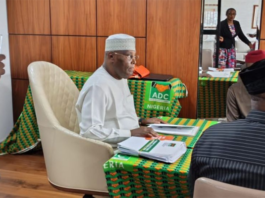
President Bola Ahmed Tinubu’s current three-week vacation in Europe provides an opportunity to revisit these questions. The Presidency announced that the President had departed Abuja for Europe as part of his annual leave and that London, United Kingdom, would be his first destination. It also explained that the President would use the period to rest and prepare for the demanding political activities ahead of the 2027 elections. Thus, it would be inaccurate to claim that Nigerians were told nothing about his whereabouts or the purpose of the journey. The more important question, however, is whether the information supplied is sufficient for a democratic society in which the President’s movements involve public resources, national security and the exercise of presidential authority.
This distinction is important. Citizens do not have an unlimited right to know every movement of their President. Publishing the precise hotel, daily itinerary, security arrangements or real-time movements of a head of state could expose him and the country to unnecessary security risks. But national security should not become a convenient justification for withholding information that can safely be disclosed. Democratic accountability requires a sensible balance between legitimate secrecy and unnecessary secrecy.
The problem of presidential foreign vacations is part of a much larger African phenomenon. Across the continent, political leaders frequently travel to Europe, America and other foreign destinations for holidays, medical treatment, shopping, conferences and private engagements. London, Paris, Lisbon, New York and other international cities have become familiar destinations for African political elites. There is nothing inherently wrong with international travel. Modern governments require international diplomacy, negotiations, investment promotion and participation in global institutions. Nigeria, in particular, cannot afford to isolate itself from the international community.
The problem begins when foreign travel becomes an expression of privilege rather than an instrument of governance.
This becomes particularly troubling when leaders who spend public money abroad preside over countries whose citizens are being asked to make painful economic sacrifices. Nigerians have been repeatedly told that the country must endure difficult reforms because resources are limited. The removal of fuel subsidies, rising electricity costs, increased transportation expenses, inflation and the growing cost of food have placed enormous pressure on households. Businesses are struggling with high operating costs, while millions of citizens are battling unemployment and declining purchasing power.
Against this background, the sight or perception of political leaders enjoying expensive foreign vacations can create a disturbing contrast. It may be perfectly legitimate for a president to take a holiday, but the optics matter. Leadership is not only about policies; it is also about example. When citizens are told to tighten their belts while public officials appear to enjoy privileges far removed from ordinary Nigerian realities, the government risks creating a psychological distance between itself and the people.
That distance can become politically dangerous because it erodes trust.
A government can survive criticism. It can survive opposition. It can even survive unpopular policies when citizens believe that those policies are necessary and that those implementing them are subject to the same principles of responsibility and sacrifice. What becomes much harder to survive is the perception that there are two standards: one for those who govern and another for those who are governed.
This is why the cost of presidential travel matters.
The Nigerian public has a legitimate interest in knowing how much presidential foreign travel costs the taxpayer. The issue is not whether the President should publish his personal financial records or private expenditure. Rather, it is whether expenditure arising from the exercise of public office should be accountable. Presidential travel can involve aircraft, security personnel, aides, accommodation, communications, logistics and diplomatic arrangements. These expenses ultimately have implications for the public purse.
Public money is not the personal property of government officials. It belongs to the people and is administered by government on their behalf. The higher the office, the stronger should be the standard of accountability.
This principle becomes even more important during periods of economic difficulty. If the government demands fiscal discipline from citizens and businesses, the political leadership must demonstrate that fiscal discipline begins at the top. A government cannot effectively preach sacrifice while appearing indifferent to the cost of maintaining political privileges.
The issue, therefore, is not whether President Tinubu deserves a vacation. He does. The question is whether the Presidency should demonstrate the same culture of prudence that it asks from the Nigerian people.
There is also a more serious dimension: national security.
Presidential travel is fundamentally different from ordinary travel. The President is the Commander-in-Chief and the head of the executive branch. His movements require security arrangements involving several agencies and may involve sensitive communications and diplomatic considerations. Consequently, there are legitimate reasons for withholding certain details of a presidential itinerary.
But this does not mean that everything should be secret.
A responsible presidency should be capable of saying where the President is going without revealing exactly where he is sleeping. It can explain the general purpose of a trip without disclosing confidential meetings. It can disclose the countries to be visited when security considerations permit, without publishing precise movements. It can publish the cost of official travel after the trip without compromising presidential security.
That is the difference between responsible transparency and reckless disclosure.
Indeed, excessive secrecy can create its own security problem. When official information is scarce, rumors fill the vacuum. In today’s social media environment, speculation can travel faster than facts. If citizens are simply told that the President has gone to Europe for three weeks, they will naturally ask questions. Where exactly is he? Why is he there? Who is he meeting? Is the trip purely private? Is it a working vacation? Are there official engagements? How much is the trip costing the country?
The government cannot prevent citizens from asking these questions. What it can do is provide credible answers.
The Presidency has said that President Tinubu will remain engaged with national affairs while on vacation and will continue to receive briefings. If that is the case, then Nigerians should have no difficulty accepting that the President can take a vacation without abandoning his responsibilities. Modern communications make it possible for a president to remain informed and make decisions while temporarily outside the country.
But the concept of a “working vacation” also raises another question. If the President is conducting substantial government business while abroad, then the public should be able to distinguish between the private and official components of the trip. This is particularly important because the journey comes as political activities surrounding the 2027 elections begin to intensify.
The separation between official presidential activities and partisan political activities must remain clear.
A president is both a national leader and, where applicable, a political party candidate. Those roles cannot be allowed to merge simply because an election is approaching. Public resources must not automatically become campaign resources. Presidential security must remain national rather than partisan. Government aircraft, personnel and facilities should be governed by clearly defined rules.
This is not a Nigerian peculiarity. It is a basic principle of democratic governance.
The broader question is why African leaders so frequently prefer foreign destinations for their personal leisure. Is it because European and American destinations provide greater privacy, security and comfort? Perhaps. But the pattern raises a deeper question: why have African political elites failed to create domestic environments in which they themselves feel comfortable taking their holidays?
If Nigeria is unsafe enough for its leaders to escape abroad whenever they want to rest, then ordinary Nigerians have an even more serious problem.
If Nigerian leaders do not trust Nigerian hospitals sufficiently for their personal healthcare, what does that say about the health system they have administered?
If Nigerian political elites prefer foreign resorts to Nigerian tourist destinations, what does that say about the tourism industry they claim to support?
And if Nigeria’s political leaders feel safer in London, Paris or Lisbon than in Abuja, Lagos, Calabar or other Nigerian cities, what does that say about the security system for which they are responsible?
These questions are uncomfortable because they expose a fundamental contradiction in African governance. Political leaders frequently speak passionately about the greatness and potential of their countries, yet their personal choices sometimes suggest that they have greater confidence in foreign institutions than in those at home.
There is an economic dimension to this as well. When Nigerians spend money abroad, foreign businesses benefit. When political elites spend significant amounts of money overseas, domestic businesses lose opportunities that could have supported hotels, restaurants, tourism operators, transport companies and other service providers.
Again, foreign expenditure is not automatically wasteful. There are legitimate reasons for spending money abroad. The question is whether public expenditure is necessary, reasonable and proportionate.
Every public official should be able to answer a simple question: would this expenditure be considered reasonable if the money belonged personally to the official?
The answer may not always be yes, but it is a useful test of public accountability.
Presidential vacations also reveal the weakness of Nigeria’s institutional culture concerning the separation between public office and private privilege. Political power often comes with enormous benefits—vehicles, security, official residences, aircraft, aides and other facilities. Over time, the distinction between what belongs to the state and what belongs to the officeholder can become blurred.
This is dangerous.
The fact that someone occupies the highest political office does not mean that every aspect of his private life belongs to the public. Presidents have a legitimate right to privacy. Democracy does not abolish personal space.
But public office inevitably changes the boundaries of accountability.
If a president travels privately, pays privately and makes private arrangements without public resources, the public interest is narrower. But if the trip involves public aircraft, public security, government personnel, official communications and the continued exercise of presidential authority, then the public interest becomes much broader.
Citizens therefore have a legitimate right to know enough to distinguish between the private citizen and the public officeholder.
This is why a mature presidency should not fear reasonable questions about presidential travel. The best response to suspicion is transparency. The best response to rumors is information. The best response to criticism is evidence.
Nigeria should therefore develop a clear and permanent policy on presidential travel. Such a policy should apply regardless of who occupies Aso Rock. Before a major foreign trip, citizens should be told the broad destination, duration and purpose, subject to legitimate security considerations. The Presidency should also distinguish clearly between official trips, private trips and working vacations.
After the trip, the public should be provided with an appropriate summary of official engagements and the expenditure associated with the official component.
Such a system would strengthen rather than weaken the Presidency.
Transparency should not depend on the personality of the person occupying the office. It should be institutionalized. Nigeria should not have one standard of presidential accountability under one administration and another standard under a different administration.
The same principle applies to presidential medical trips. When African leaders repeatedly travel abroad for medical treatment, the issue should not simply be whether they have the right to choose their doctors. Of course they do. The larger question is what their choices say about the quality of the institutions they oversee.
If leaders repeatedly seek medical treatment abroad, the country should ask why its healthcare system does not inspire confidence.
If leaders repeatedly vacation abroad, the country should ask why its tourism and security environments do not inspire confidence.
If leaders routinely keep their wealth abroad, the country should ask why its domestic institutions do not inspire sufficient confidence for investment.
The choices of political elites are often mirrors reflecting the condition of the societies they govern.
This is why President Tinubu’s European vacation should not be treated merely as a story about a politician taking a holiday. It is an opportunity to examine the relationship between power and accountability, privilege and responsibility, secrecy and transparency.
There is no reason to assume that President Tinubu’s current vacation is improper simply because it is taking place in Europe. The Presidency has given a legitimate explanation for the trip, identified London as the first destination and indicated that the President will remain engaged with national affairs. Those explanations should be acknowledged.
But accountability does not end with accepting the government’s explanation. It requires citizens to ask reasonable questions and government to provide reasonable answers.
The President may need his vacation. The country may also need him rested and mentally prepared for the challenges ahead. Nigeria faces enormous economic, political and security problems, and governing such a complex country is undoubtedly demanding. A rested president is preferable to an exhausted one.
But the Nigerian people also deserve a government that understands that public trust is fragile.
The real issue, therefore, is not whether President Tinubu should vacation in Europe. He should be free to rest, provided that the rules governing public expenditure, national security and official responsibilities are respected.
The issue is whether the Presidency understands that citizens are stakeholders in the affairs of the Nigerian state.
They are not spectators.
They finance government through taxes and other contributions. They provide the legitimacy through which political authority is exercised. They bear the consequences of government policies. They endure the economic difficulties associated with reform. They live with the consequences of insecurity and institutional failure.
They therefore have a right to ask questions.
Where is the President?
Why is he there?
How long will he remain there?
What is the official purpose of the trip?
What public resources are being committed?
How are the affairs of government being managed while he is away?
These are not disrespectful questions. They are democratic questions.
The Nigerian people do not need to know the President’s hotel room number, his private conversations or his precise movements. Such information could compromise his security and privacy. But they deserve sufficient information to know that the highest office in the land is being exercised responsibly.
Ultimately, the debate over presidential vacations should become a debate about the kind of political culture Nigeria wants to build.
Nigeria needs a culture in which leaders can enjoy legitimate privileges without becoming disconnected from the people. It needs a culture in which public money is treated as public trust. It needs a culture in which national security is protected without being used as an excuse for unnecessary secrecy. It needs a culture in which presidents can travel abroad without citizens wondering whether their government is hiding something from them.
Most importantly, Nigeria needs a culture in which public office is understood as a responsibility rather than a personal entitlement.
President Tinubu may be vacationing in Europe, but Nigeria does not go on vacation.
The insecurity remains. The economy remains. The unemployment remains. The hardship remains. The responsibilities of government remain.
And the Nigerian citizen remains the ultimate stakeholder.
A president has a right to rest. A citizen has a right to ask questions. National security has a right to protection. Public money has a right to accountability. And democracy has a right to transparency.
These principles are not mutually exclusive.
The challenge is to balance them intelligently.
The President can enjoy his vacation. The Presidency can protect sensitive security information. But neither should come at the expense of the citizen’s fundamental right to know enough about the exercise of public power.
In the final analysis, the question is not simply, “Where is the President?”
The deeper question is: “Does the President remember that wherever he goes, he carries with him the trust of the Nigerian people?”
That is the standard by which presidential vacations—and presidential leadership generally—should ultimately be judged.
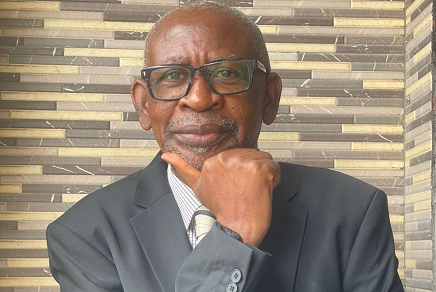
Nze David N. Ugwu is the Managing Consultant of Knowledge Research Consult. He could be reached at [email protected] or +2348037269333