

Policy, Capital And The Road To Nigeria’s Real Estate And Hospitality Boom — Haldane McCall GMD/CEO, Dr Akinlade
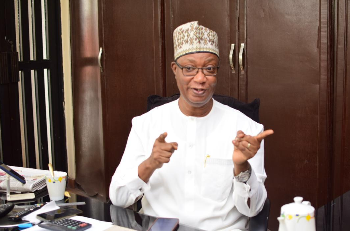
Nigeria’s real estate and hospitality sectors have significant potential to drive investment, create jobs and contribute meaningfully to economic growth. Yet, high construction and operating costs, expensive financing, infrastructure deficits, land administration challenges, multiple taxes and regulatory bottlenecks continue to constrain the sectors’ ability to reach their full potential. Against this backdrop, Group Managing Director of Haldane McCall Plc, Dr Edward Akinlade, provides an industry perspective on the challenges confronting real estate and hospitality businesses, the policy and infrastructure interventions required from government, and how a more enabling investment environment can unlock private capital, expand housing supply, strengthen hospitality development and create sustainable value for investors and the wider economy. Dr Akinlade also speaks on the company’s recent performance, its consistent dividend payments, the successful completion and expansion of its Mile 12 development and its new Olorushogo joint venture.
The real estate sector continues to face challenges ranging from high construction costs and expensive financing to infrastructure deficits and difficulties in accessing land. From your experience, what are the major constraints holding back the growth of Nigeria’s real estate industry?
The challenges are significant and interconnected. The rising cost of building materials, high interest rates, limited access to affordable long-term financing, land administration bottlenecks and inadequate infrastructure all increase the cost of delivering housing and commercial properties. These challenges ultimately affect affordability, demand and developers’ ability to deliver projects profitably. Government has an important role to play in addressing these structural constraints. We need policies that improve access to long-term and reasonably priced financing, simplify land administration and strengthen infrastructure around emerging development corridors. There is also a need for greater stability and predictability in taxation, planning regulations and other policies affecting property development. A more coordinated approach between the Federal Government, state governments and financial institutions would significantly improve the investment environment.
What specific interventions would you like to see from government to make real estate development more affordable, competitive and attractive to both local and institutional investors?
Government should focus on creating an environment where private capital can participate more effectively in housing and real estate development. This includes improving access to mortgage and construction finance, expanding infrastructure, particularly roads, electricity and water, and making land acquisition and title registration faster and more transparent. We also need incentives that encourage developers to provide housing at different price points, as well as stronger public-private partnerships for large-scale housing and infrastructure projects. The objective should not simply be to regulate the sector, but to create conditions that allow developers to build at scale, investors to earn reasonable returns and more Nigerians to access quality housing.
Haldane McCall also has interests in the hospitality segment. What are the major challenges currently confronting Nigeria’s hospitality industry, particularly in terms of operating costs, infrastructure and consumer demand?
The hospitality sector has enormous potential, but operators are confronted by high energy and operating costs, inadequate infrastructure, rising personnel and maintenance expenses and the broader pressure on consumers’ disposable income. Hotels and other hospitality businesses are also capital-intensive, so the cost of financing can significantly affect expansion and profitability. The industry requires a more supportive operating environment. Reliable electricity, better transportation infrastructure, improved security and policies that reduce the cost of doing business would make a substantial difference. At the same time, operators must continue to improve service quality, adopt technology and develop products that respond to changing consumer preferences.
What should government do to unlock the investment potential of Nigeria’s hospitality sector and position it as a stronger contributor to economic growth and employment?

Government should recognise hospitality as a strategic component of the economy because of its capacity to attract investment, create jobs, support tourism and stimulate activities across several other sectors. There should be deliberate policies to improve tourism infrastructure, transportation connectivity and security, while reducing unnecessary regulatory and multiple-tax burdens on operators.
Government can also encourage investment through targeted incentives, public-private partnerships and easier access to financing for viable hospitality projects. Most importantly, there should be a consistent long-term tourism and hospitality development strategy. If we create the right environment, Nigeria has the population, business activity, cultural diversity and tourism potential to support a much larger and more competitive hospitality industry.
Haldane McCall Plc has been consisted in its dividend payment after its listing. What does this milestone mean to shareholders and the Group?
Yes. It’s a fulfilment of promise before the company was listed. The 2025 dividend payment underscores Haldane McCall Plc’s commitment to delivering sustainable value to shareholders. It reflects the Board’s confidence in the Group’s underlying business fundamentals and its commitment to ensuring that shareholders participate meaningfully in the value created. We recognise that investors expect both growth in the value of their investments and tangible returns, and we will continue to pursue a balanced approach that rewards shareholders while retaining adequate resources to support the Group’s long-term growth and strategic objectives.
What is the significance of completing the sales of the Mile 12 project?
The completion of the sales at our Mile 12 project is an important achievement because it demonstrates the market’s confidence in the quality and commercial viability of our development strategy. It also validates our ability to take a project from development through completion and sales. More importantly, the successful completion has created the platform for us to move into the next phase of the project. We are now proceeding with Phases 2 and 3, comprising 64 units of two-bedroom flats, which will enable us to deepen our presence in that market and create additional value from the project.
What can investors expect from Phases 2 and 3 of the Mile 12 project?

Phases 2 and 3 represent the next stage of our growth strategy at Mile 12. The development of 64 units of two-bedroom flatsis designed to respond to demand for quality and relatively affordable residential accommodation in a strategically important part of Lagos. We are approaching the project with the same emphasis on quality, timely delivery and commercial sustainability that guided the earlier phase. We believe the project will contribute positively to our revenue and earnings as the development progresses and units are delivered to the market.
Haldane McCall has also completed a joint venture agreement for the development of 32 units of three-bedroom apartments at Olateju Street, Olorushogo, Lagos. Why is this project important to the Group?
The completion of the joint venture agreement is another important step in expanding our development pipeline while deploying capital efficiently. The project will comprise 32 units of three-bedroom apartments at Olateju Street, Olorushogo, Lagos, giving us an opportunity to participate in a residential development without relying solely on a conventional acquisition-and-development model. Joint ventures enable us to combine our development expertise with strategic partners and optimise the use of capital while expanding our project portfolio. We see this as an important component of our broader growth strategy.
How do these developments fit into Haldane McCall’s overall strategy for growth and shareholder value creation?

These initiatives are closely aligned with our strategy of building a sustainable property development business capable of generating recurring value for all stakeholders. The dividend payment addresses shareholder returns, while the completion and expansion of the Mile 12 project and the new Olorushogo joint venture strengthen our development pipeline. Our objective is to create a healthy balance between immediate value distribution and reinvestment in projects that can generate future revenue and profitability. As we execute these projects, we will remain focused on prudent capital allocation, project delivery and the creation of long-term shareholder value.
Looking ahead, what should shareholders and investors expect from Haldane McCall Plc?
Our message to shareholders is one of confidence and disciplined optimism. We have demonstrated our ability to complete projects, sell completed units, commence dividend payments and establish new development partnerships. The next phase is about scaling these achievements. We will continue to identify viable opportunities, strengthen our project pipeline and execute developments that meet market demand while maintaining sound financial discipline. Ultimately, our goal is to build Haldane McCall into a stronger, more diversified and consistently value-creating real estate group, with shareholders remaining at the centre of that journey.

